

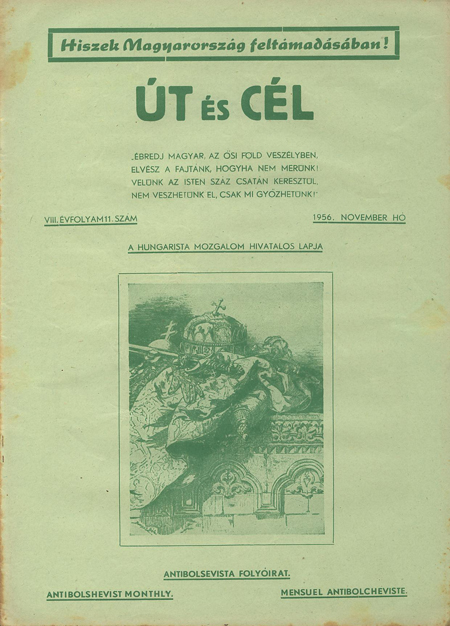
Political ideas and terms used in political life generally share the fate of their originators and adherents: They succeed or fail together with them. If they succeed and outlive their first announcers, if they are adopted by new generations, political tendencies or different social strata, their substantial meaning will often be changed and transformed. Otherwise, since the success of the democracy of the masses introduced by the French Revolution, the ideas have been subject to a process of wearing down. The masses are thinking, first of all, in words and slogans, not in concepts and conceptual contents. They are inclined to degrade ideas and concepts to the form of bare slogans, and this inclination is encouraged by the „democratic leaders”, who seek their favour. The last one and a half centuries have been the age of rapid decay of ideas, ideals, and moral values. So many used and abused them, and referred to them, that it is not strange that they lost their original meaning, importance and credit. Pitiful and disappointing though this is, there is yet comfort in it — namely that the wearing process is taking place on the surface only, on the level of masses and slogans, while it leaves the substantial meaning of the ideas untouched. It also happens very often that the masses change over the words and slogans only giving new names to old phenomena, turn old contents into new expressions, and surround the age-old prejudices with the armour of new-born arguments. And the result of all this is the insoluble and unblessed conceptual chaos of the modern age, the lack of clarity of thought and the confusion of ideology. Ö. A.: Nationalism, Supranationalism, Connationalism részletei…


